
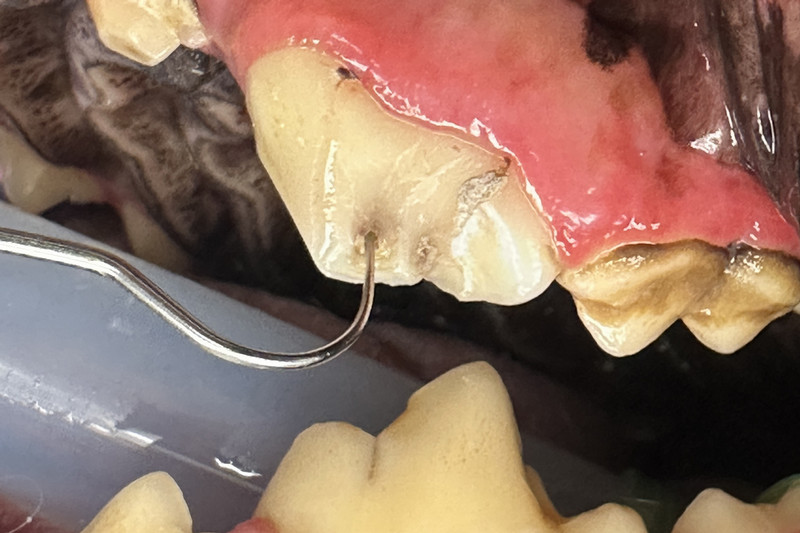
A fractured tooth (or teeth) is the most common oral trauma seen in dogs, and it is usually caused by chewing on hard objects. There are little to no regulations governing what is appropriate to market as a chew toy for animals. Consequently, the marketplace is filled with inappropriate chew toys and misinformation. Our ‘rule of thumb’ is: if it is too hard for you to bend, flex, indent with a fingernail, or break by hand, then it is too hard for your dog to chew.
Fractured teeth should be evaluated immediately, and if there is any sign of pulp exposure, then treatment is required to prevent the development of infection. "Watching and waiting" of the fractured tooth is not an appropriate course of action.
Often facial swelling is the first symptom noted by owners and can often be confused with an insect bite. Antibiotics can help reduce the swelling, but only temporarily. A definitive treatment of extracting the tooth or root canal therapy needs to be performed.
Root canal therapy can be used to save most fractured and/or abscessed teeth. This process is similar to treatment with humans. The root pulp and infection within the root canal are removed, and the canal is sealed to prevent reinfection. Metal crowns can be used to protect the treated tooth from further fracture, in certain cases.
Crown reduction and vital pulp therapy are another aspect of endodontics. This treatment is utilized in cases of malocclusion, and it is a highly successful method that shortens the cusp height of the teeth, while maintaining their vitality to allow the tooth to continue to mature normally.

Cookies on this website are used to both support the function and performance of the site, and also for marketing purposes, including personalizing content and tailoring advertising to your interests. To manage marketing cookies on this website, please select the button that indicates your preferences. More information can be found in our privacy policy here.